GALLERY DETAILS


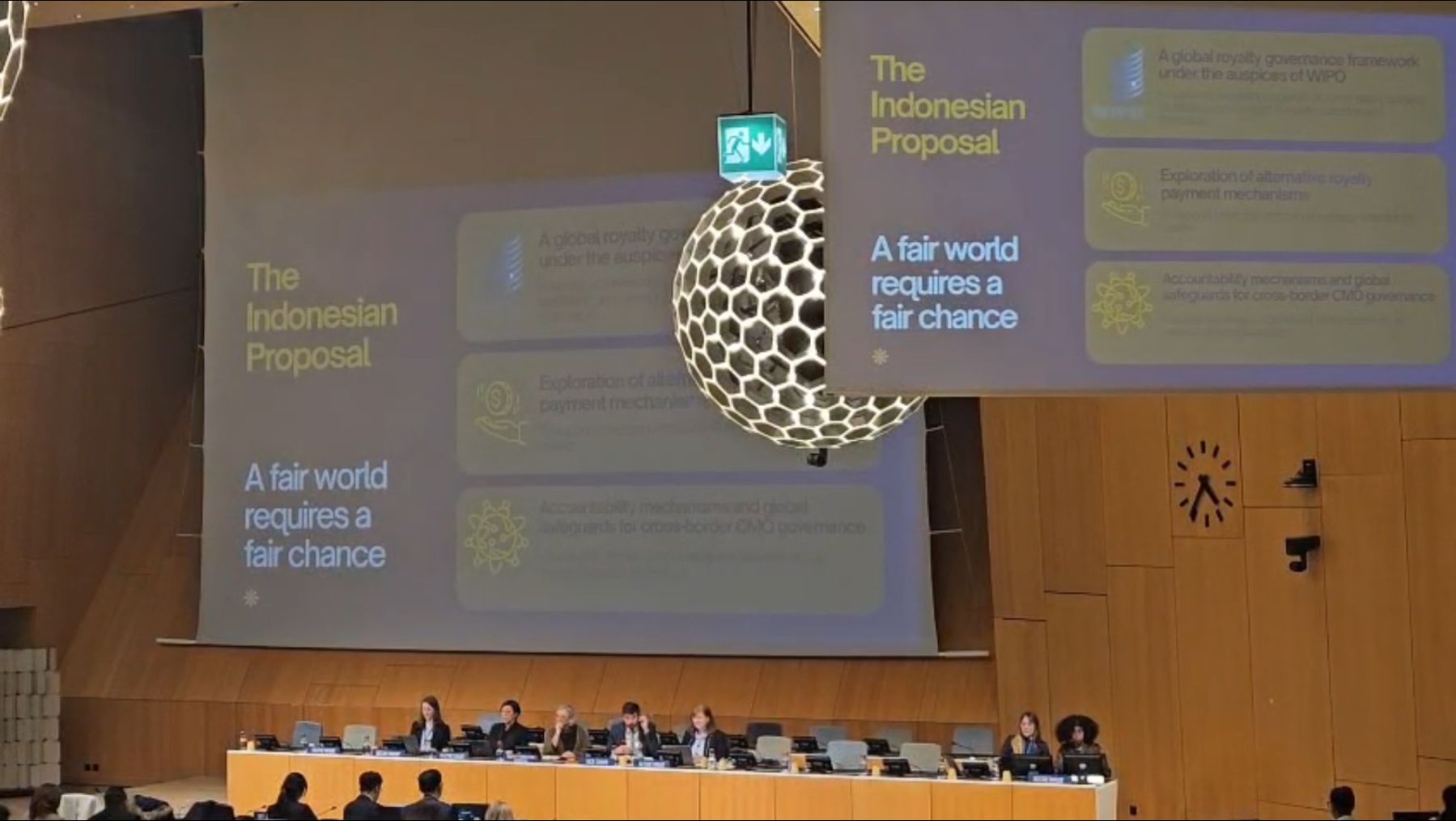
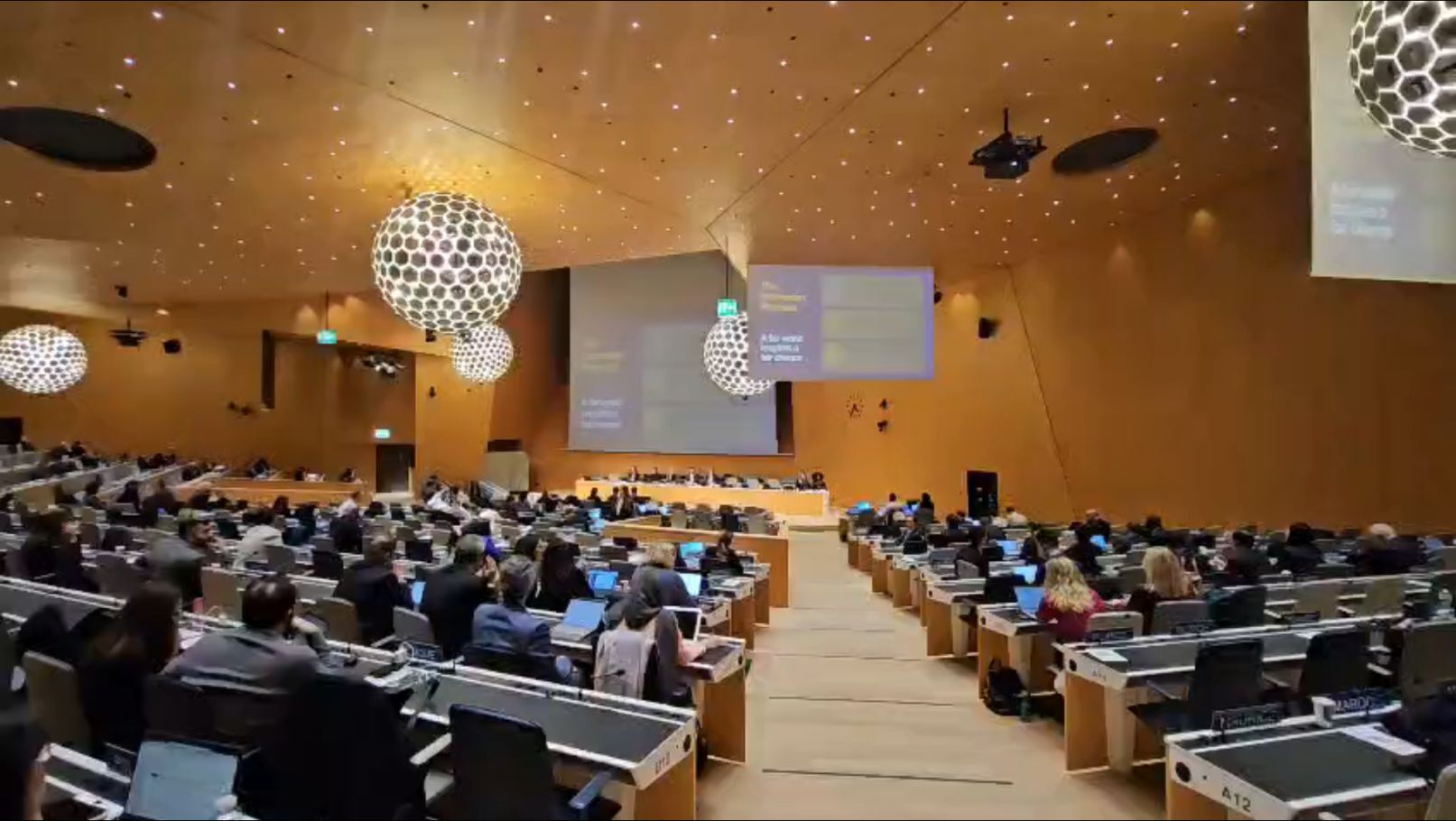
Jakarta — The Government of Indonesia has officially submitted the Indonesian Proposal for a Legally Binding International Instrument on the Governance of Copyright Royalty in Digital Environment to the World Intellectual Property Organization (WIPO) as a strategic step to promote fairness in global digital royalty governance. The proposal will be presented and discussed at the Standing Committee on Copyright and Related Rights (SCCR) meeting held from 1–5 December 2025 in Geneva, Switzerland. A total of 194 WIPO member states are participating in the session.
This initiative is driven by the rapid growth of the global creative industry, now valued at more than USD 2.3 trillion per year, with over 67 percent of the global music market dominated by streaming services. However, this growth has not translated into proportional welfare for creators, as much of the economic value generated in the digital space has not been fairly distributed to them.
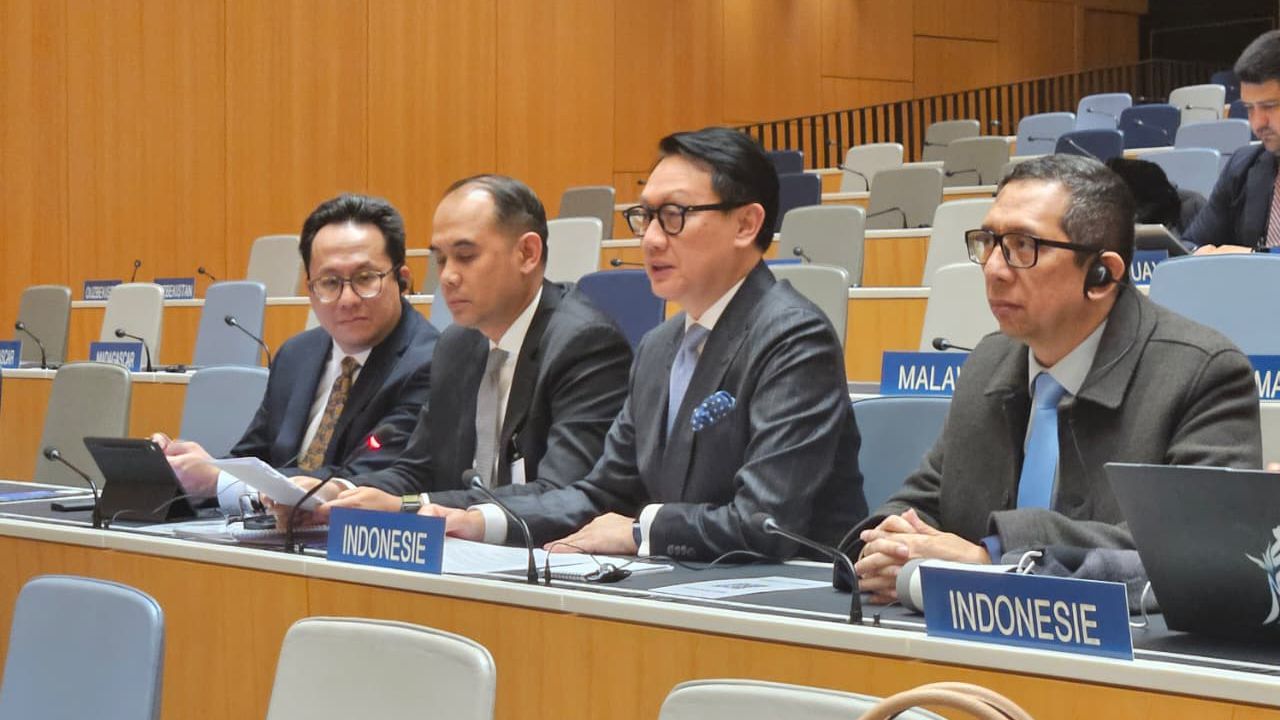
The meeting is led by Indonesia’s Vice Minister of Foreign Affairs, Arief Havas Oegroseno, and Director General of Intellectual Property, Hermansyah Siregar. In addition, the Head of the Legal Strategy Agency (BSK), Andry Indradi, attended the session and contributed to strengthening the content of Indonesia’s proposal on music and media royalties. The initiative was first conceived by Minister of Law Supratman Andi Agtas in May 2025 and began to gain traction at the SCCR session this December. On the sidelines of the meeting, Indonesia held bilateral discussions with regional groups including GRULAC (Latin America and the Caribbean), as well as with Japan and the United States.
“Often, creators receive only a small fraction of the revenue generated by their own works. This reality is not merely an economic issue — it is an issue of fairness, justice, and moral recognition. Therefore, Indonesia calls for renewed commitment and collective action,” emphasized Vice Minister of Foreign Affairs Arief Havas Oegroseno, head of the Indonesian delegation at SCCR.
He stated that the submission of this proposal reflects the country’s responsibility to fight for the economic rights of creators at the global level, not only domestically. He also noted that the need for a binding international instrument arises from widening structural inequalities in the global digital royalty ecosystem. Each year, UNESCO and the World Bank estimate that USD 55.5 billion in music and audiovisual royalties disappear — uncollected, unrecorded, and never received by creators.
“A fair and equitable royalty system must uphold the dignity of all creators, regardless of geographic location or market size. Fairness requires transparency, allowing creators to understand how their royalties are calculated, distributed, and reported,” Havas stated.
Minister of Law Supratman Andi Agtas, the initiator of this proposal, added that existing inequalities are inseparable from the dominant power of global digital platforms in determining the economic value of creative works. Platforms control recommendation algorithms, licensing models, metadata standards, and revenue reporting systems. The Government of Indonesia identified four key structural problems: fragmented metadata, dependence on unfair royalty-sharing models, inconsistent royalty valuation across countries, and non-transparent distribution governance.
“In the digital ecosystem, whoever controls the data controls the value. This is the root of the current global royalty problem,” Supratman explained.
To address these issues, Indonesia offers a new global royalty governance architecture that is concrete, operational, and technical, built upon three main pillars: global standardization of phonogram and audiovisual metadata, mandatory transparency in licensing, usage, and cross-border royalty distribution, and the establishment of a global oversight and accountability mechanism through international audits. These pillars aim to ensure that no creative work is “lost” in the system and that every utilization of a work is accurately recorded with clear economic value.
To ensure these mechanisms function effectively, Indonesia emphasized that the proposed instrument must be legally binding. A soft-law approach is deemed insufficient to address the power imbalance between states and large global digital platforms. A binding instrument is necessary to guarantee consistency across countries and strengthen the legal position of developing nations in defending their economic rights.
“Without legal obligations and enforceable sanctions, transparency will remain a mere moral commitment with no real force,” Supratman noted.
The successful adoption of this proposal is expected to generate direct and significant benefits for creators worldwide, including those in Indonesia. Creators will gain access to global data on usage, understand which countries consume their works the most, comprehend the true economic value of each use, and receive royalties that have long been under-distributed. Indonesia’s music and audiovisual sectors could see economic gains reaching trillions of rupiah per year as global data transparency improves.
For this reason, the Minister of Law called for strong support from Indonesian creators. He also encouraged creators to actively protect their intellectual property through copyright registration so that their economic rights can be better defended.
“Keep creating, and trust that the state is fighting for your rights — not only in Jakarta, but before the world,” he concluded.


 +41 22 338 3350
 jenewa.ptri@kemlu.go.id